A Day Worth Sharing
- Ablewell Care
- May 13
- 3 min read
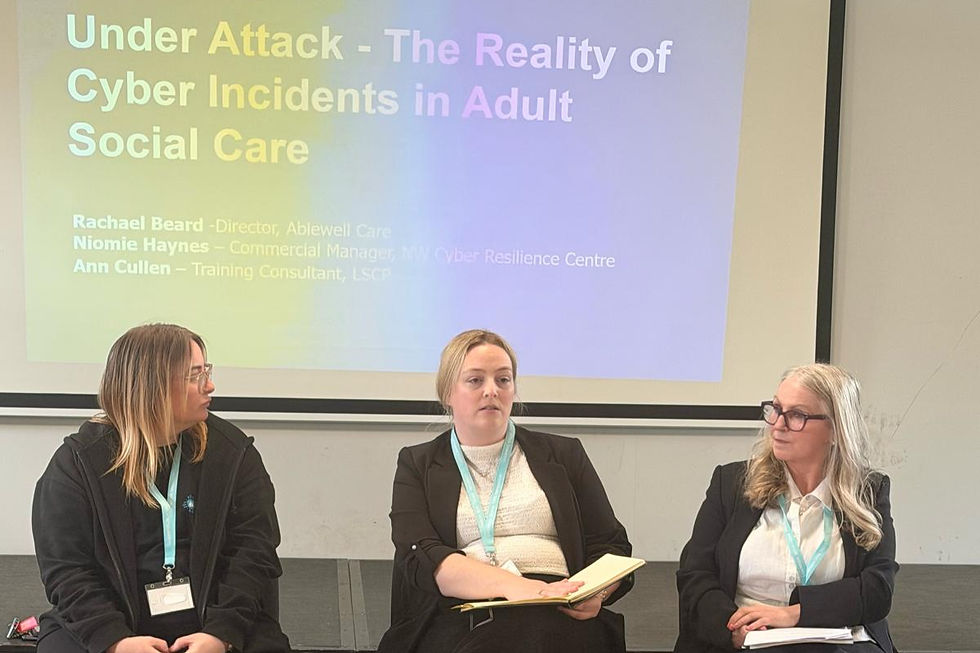
This week, I had the privilege of attending (and speaking at) the Northwest Cyber Digi-Tech Network meeting in Preston, hosted by the Liverpool Social Care Partnership (LSCP).
The Northwest Cyber Digi-Tech Network is part of LSCP's ongoing mission to bridge the gap between emerging technologies and their use within care settings. The network brings together care providers and IT professionals with a shared goal of improving cyber awareness and digital safety across the social care sector.
The 13 May meeting brought together people from a real mix of backgrounds including Registered Managers, technology experts, commissioners, the Police and other social care leaders from across the North West. That blend of perspectives made for genuinely valuable conversation throughout the day.
Sharing Our Experience
I was invited to speak on a panel about the real-world impact of cyber-attacks within social care and specifically, what recovery looks like from the inside.
Our organisation experienced this first-hand when a software provider suffered a cyber-attack that took down their cloud-based database. We were able to switch fully over to our standalone local server which meant we retained access to our own data, but we lost the electronic staff logging in and out function for around eight weeks. During that time, we managed through confirmations from staff at the end of each shift, confirming all calls had been completed. Because we were paper-based for support planning and care records, our care delivery continued safely throughout.
We were lucky, as other providers did not have access to a standalone server, or a backup of the database. This meant that they were relying on memory and paperwork to continue delivering the correct services to the correct people.
It felt important to speak honestly about both what went well and what we'd do differently, including having a more formal written response plan ready to activate, and a named coordinator from the outset. The room responded well to the candour, and attendees came forward to ask follow-up questions.
Networking
One of the highlights of the day was the lunch provided by LSCP, which created a relaxed and genuine space for networking. I met people from a wide range of roles from frontline care managers to cyber security specialists. The conversations were honest and practical. Everyone was there to learn and share.
These cross-sector connections feel increasingly important. Cyber security in social care isn't just an IT problem it sits at the intersection of governance, workforce, commissioning, and care quality. Days like this remind you how much stronger the sector is when it talks to itself.


Breakout Activity
The day closed with a fun and well-designed breakout activity focused on password security. It was interactive, competitive, and (without giving too much away) made the point very effectively about how easy it is to underestimate the risk of weak passwords.
It's easy for cyber security to feel abstract or technical to care staff on the ground. Activities like this are a brilliant way of making it tangible, memorable, and something people actually talk about when they get back to the office.
Why Events Like This Matter
Social care has historically been behind the curve on digital infrastructure and cyber security is an area where that vulnerability can have real consequences for the people we support. The work LSCP are doing to bring providers together and raise the baseline across the sector is genuinely important.
If you're a care provider in the Northwest and you haven't yet engaged with LSCP's cyber security support including their free Data Security and Protection Toolkit (DSPT) guidance, I'd encourage you to get in touch. The support is practical, and tailored to the realities of running a care service.
A big thank you to the team at Liverpool Social Care Partnership for hosting such a well-organised and worthwhile day — and to John Berry, who attended alongside me.


